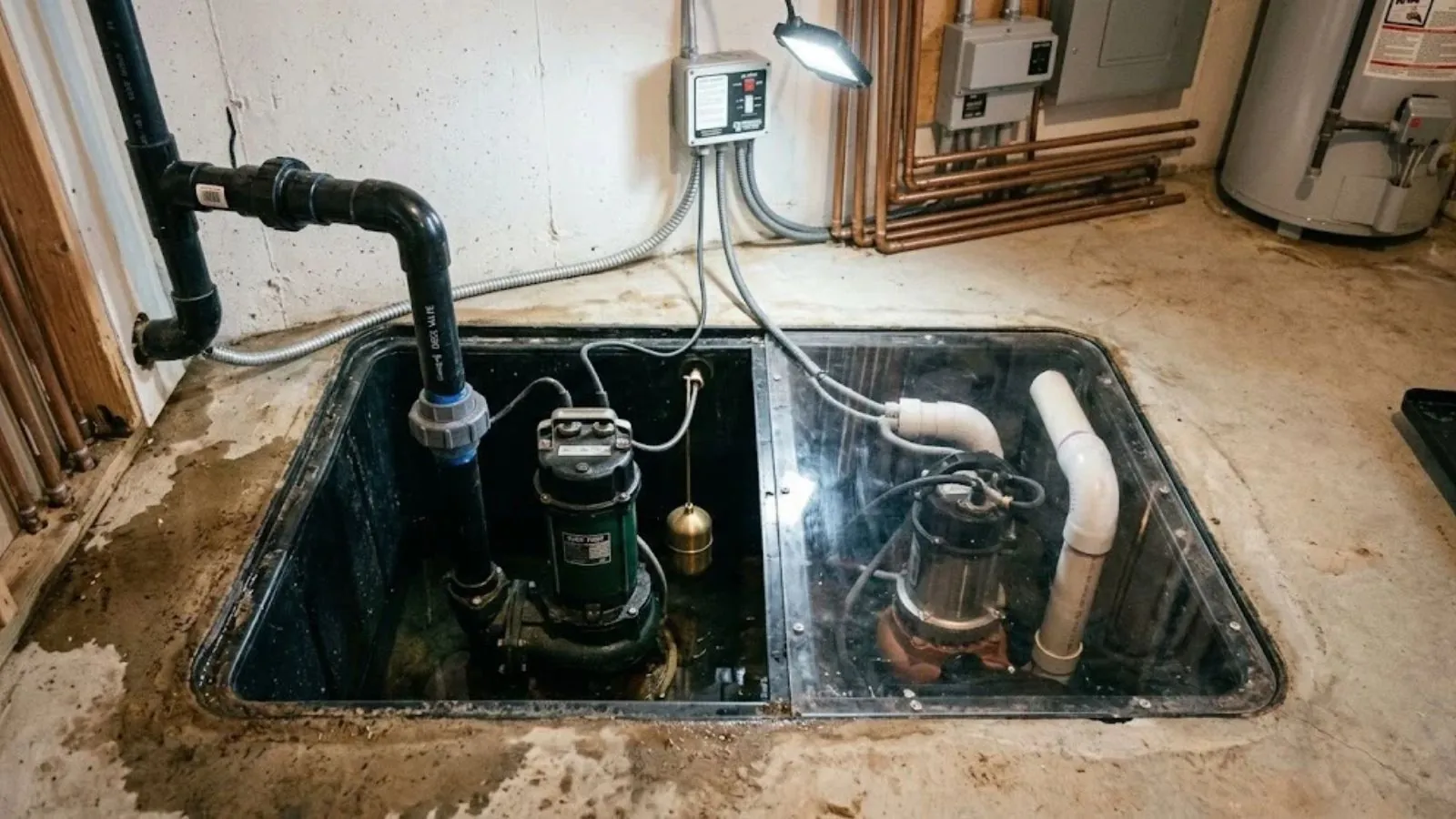
Where sump and ejector pumps are found around Costa Mesa
Knowing which kind of pump you have tells you how urgent the problem is.
| Location | Pump type | What it handles |
|---|---|---|
| Below-grade parking garages in condo and apartment buildings | Sump pump. | Rainwater and groundwater runoff. |
| Elevator pits in offices and mid-rises | Sump pump. | Water that collects at the bottom of the shaft. |
| Garage conversions and ADUs with a lower bathroom | Sewage ejector pump. | Wastewater that cannot drain by gravity. |
| Lower-level laundry or bar sinks | Drain or effluent pump. | Gray water lifted up to the main line. |
| Low spots in yards and patios | Sump or drainage pump. | Storm runoff during heavy rain. |
In Costa Mesa, look for them in office buildings around South Coast Metro and in newer condo and apartment buildings with underground parking.
Signs a pump is failing
- A high-water alarm is sounding or its light is on.
- Water is standing in the pit or spreading across a garage floor.
- The pump runs constantly, or cycles on and off every few seconds.
- A humming sound with no water moving, which often means a jammed impeller.
- Sewage smell from an ejector pit, or slow drains on the lower level.
Emergency safety: if the pit is flooding before we arrive
- Stay out of the water. Do not step into a flooded pit or garage where cords or the pump may be live.
- Cut the power safely. Switch off the pump circuit at a dry panel if water is near electrical equipment.
- Stop adding water. For an ejector pit, stop using every fixture that drains into it.
- Move vehicles and stored items. Get cars and belongings out of a below-grade garage if it is safe.
- Call the 24/7 line. Tell us whether it is a sump or an ejector pump and how high the water is.
In multi-unit buildings, call the property manager or HOA as well, since the pump is usually common equipment.
Sump pump or sewage ejector: the difference matters
| Point | Sump pump | Sewage ejector pump |
|---|---|---|
| What it moves | Groundwater and rainwater. | Wastewater from toilets and drains. |
| Where it discharges | An approved storm or landscape outlet. | The building sewer. |
| Pit | Usually open or loosely covered. | Sealed and vented. |
| Failure risk | Flooding. | Sewage backup, a health hazard. |
Sanitation agencies generally prohibit sending rainwater or groundwater into the sanitary sewer, so a sump pump should not be piped into a sewer line. A sewage ejector is the opposite: it must discharge to the sewer through a check valve.
Repair or replace
Many failures are a single part. Float switches stick or get trapped against the pit wall. Check valves fail and let water run back into the pit, so the pump short-cycles. Debris jams the impeller. These are usually quick repairs.
A pump with a burned-out motor, a cracked housing or years of constant cycling is usually better replaced. For buildings, the replacement should be sized for the actual inflow, and a duplex setup with two alternating pumps and an alarm is worth considering where a failure would flood cars or tenants.
Sewage ejector installations follow the California Plumbing Code, which is based on the Uniform Plumbing Code (UPC): a sealed, vented sump, a check valve and a full-port shutoff on the discharge.
Sewage ejector pumps fail the same way sump pumps do, but the stakes are higher because the basin holds sewage. If an ejector alarm sounds, stop using every fixture that drains to it, including a downstairs toilet or laundry, until the pump is checked.
Test a sump pump before the rainy season by pouring water into the pit until the float lifts. If the pump does not start and empty the pit, call before the first storm.
Storm season in Costa Mesa
Southern California rain comes in bursts, mostly between November and March. A pump can sit idle for months and then face a heavy storm on its first cycle of the year. That is when stuck floats and dried-out check valves show up.
If a garage or lower level floods anyway, standing water should be removed and the area dried quickly. See emergency water extraction for that step. For a lower-level drain that is backing up rather than flooding, see sewer backup service.
What sump pump repair costs
Most calls are one part. Some need a new pump or a second pump.
| Factor | Why it matters |
|---|---|
| Pump type | Sewage ejectors cost more to service than simple sump pumps. |
| Part or pump | A float switch or check valve costs far less than a new pump. |
| Access | Deep pits, elevator shafts and sealed basins take longer. |
| Building systems | Duplex pumps, alarms and control panels add parts and labor. |
| Timing | Night, weekend and storm-day calls usually cost more. |
Insurance note: flood damage from a failed pump may need a specific endorsement. Check your policy or the building's master policy.
Want your real number? Call (714) 750-8637 and describe the job.
Pump service around Costa Mesa
We service pumps across 92626 and 92627 and in nearby Santa Ana, where older commercial buildings Downtown often have lower-level pumps. Businesses can pair pump checks with commercial plumbing maintenance.