The CMSD rebate, in plain terms
The Costa Mesa Sanitary District runs a rebate program for residents who inspect their laterals. The amounts depend on how the camera gets into the line.
| Work | Rebate | Condition |
|---|---|---|
| Camera run from a ground-level cleanout. | Up to $200. | Must record to past the main connection. |
| Camera run from a roof vent or toilet flange. | Up to $250. | Same recording rules apply. |
| Installing a ground-level cleanout. | Up to $500. | Must be permitted. |
Apply with the district before the work and get a confirmation number. The approval stays valid for three months after that, so schedule the inspection inside that window.
What the video has to show to qualify
Rebate footage that misses one of these can be rejected, so we set the camera up for it from the start.
- Your property address on screen.
- The date of the inspection on screen.
- A footage counter that runs the whole time.
- The entire lateral from the house until past the connection to the district main.
What a camera run tells you
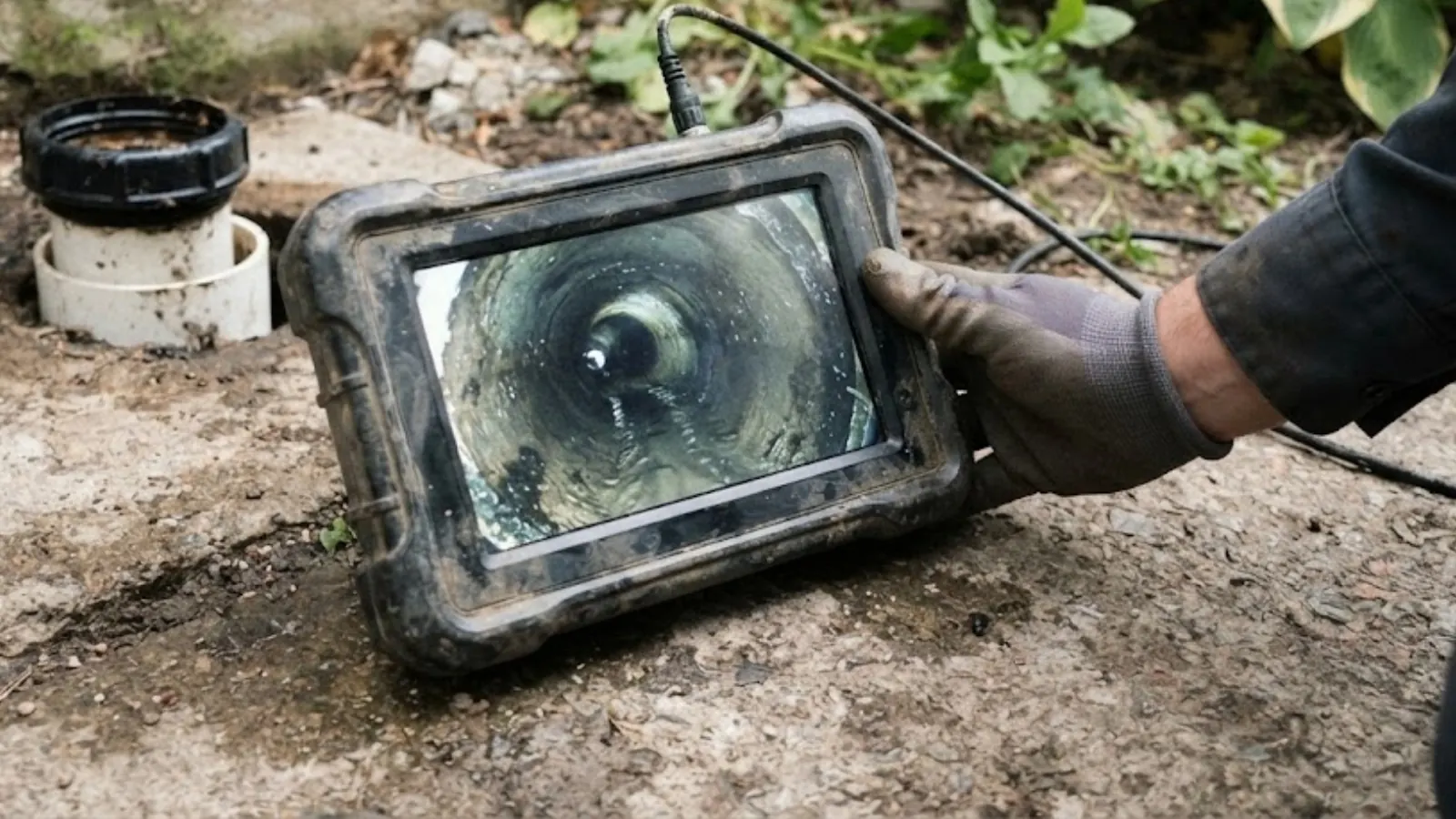
The footage shows the pipe material, the joints, and anything inside the line. Common findings in older Costa Mesa homes include root intrusion at clay joints, cracked or offset sections, heavy grease buildup, and low spots where water sits.
It also shows distance. The footage counter tells us exactly how far from the entry point a problem sits, and a locator on the camera head tells us how deep it is. That turns a vague repair into a precise one.
Repair quotes for the lateral are built from this footage, and so are replacement quotes.
A camera run during escrow is worth ordering in Mesa Verde, the Eastside and Halecrest, since the original laterals in those 1950s and 1960s neighborhoods are rarely documented.
Buying a home built in the 1950s or 1960s? A camera inspection before closing costs little next to a surprise lateral replacement a year later.
Pipe materials you may see on the footage
The material tells you a lot about how the line will age from here.
| Material | How to recognize it | What it means |
|---|---|---|
| Vitrified clay | Short sections with a joint every few feet. | Durable pipe, but roots enter at joints. |
| Cast iron | Dark, often scaly interior. | Rust and scale narrow the pipe over decades. |
| ABS or PVC plastic | Smooth black or white interior, long sections. | Newer pipe, usually from a past repair. |
| Mixed materials | A change in color or texture mid-run. | An earlier repair. Check the transition joints. |
Many older laterals are a patchwork. The footage shows exactly where one material ends and the next begins, which is where problems often start.
How an inspection visit runs
- Access. We open the cleanout, or use a roof vent or toilet flange if there is no cleanout.
- Clear if needed. A blocked line gets cleared first so the camera can pass.
- Record. The camera travels the full lateral with the address, date and counter on screen.
- Review. We walk you through the footage and mark anything that needs attention.
If the line is blocked when we arrive, clearing the clog comes first, and the camera run follows on the same visit.
What a sewer camera inspection costs
The inspection itself is a short job. These factors change the price.
| Factor | Why it matters |
|---|---|
| Entry point | A ground-level cleanout is fastest. Roof vent or toilet entry takes longer. |
| Line condition | A blocked line needs clearing before the camera can run. |
| Length | A long lateral to a mid-street main takes more time to record. |
| Reporting | Rebate-ready recording and a written summary are included on request. |
Rebate note: the district reimburses you after approval, so you pay the invoice first. Keep the invoice and the video file for your application.
Want your real number? Call (714) 750-8637 and describe the job.
Camera inspections nearby
We run cameras across 92626 and 92627 and in nearby cities like Fountain Valley, where the sewer agency and rules differ. Grease-coated lines can be cleaned with hydro jetting after the inspection.