Signs the whole lateral is done
One bad joint is a repair. These signs point to replacement.
- Camera footage shows cracks, roots or offsets along most of the run, not one spot.
- The line has needed clearing several times in a year despite earlier repairs.
- The pipe has collapsed or lost its round shape in more than one place.
- Sections of the pipe are missing or the soil is visible through the pipe wall.
Not sure yet? A camera inspection gives you footage to decide with, and the district may pay part of it.
Pipe bursting or open trench
Both install a new pipe. The difference is how much ground gets opened.
| Method | How it works | Best for |
|---|---|---|
| Pipe bursting | A bursting head pulls new pipe through the old one, breaking the old pipe outward. | Long runs under driveways, landscaping or the street, with pits at each end. |
| Open trench | The line is dug out and replaced along its full length. | Shallow runs, lines with sags that need regrading, or very tight bends. |
| Hybrid | Trench in the yard, bursting under the hardscape or street. | Lots with both open yard and paved sections. |
Pipe bursting follows the existing path. If the old line has a sag, that part is usually dug and regraded so the new pipe has proper slope.
Permits and the street section
Replacing a lateral needs a plumbing permit, and the new pipe is inspected against the California Plumbing Code, which is based on the Uniform Plumbing Code (UPC). Any work that opens the street or sidewalk also needs an encroachment permit from the City of Costa Mesa before digging starts.
We handle both permits and schedule the inspections. You do not have to deal with the city directly.
When the replacement is done, adding a ground-level cleanout makes every future service call faster. The Costa Mesa Sanitary District reimburses up to $500 toward a permitted cleanout.
Replacing before you sell or after you buy
A failed lateral is one of the most common surprises after a home purchase, because the pipe is buried and the seller may never have filmed it. Buyers who camera the line during escrow can negotiate the cost of replacement before closing instead of paying for it afterward.
Sellers can use the same footage. A recent replacement with a closed permit is a clean answer to a buyer's inspector, and it removes a common reason for last-minute price cuts.
The new pipe matters too. Pipe bursting typically uses fused polyethylene, which has no joints for roots to enter. Open trench work usually uses solid-wall plastic sewer pipe with glued or gasketed joints.
Full replacement makes the most sense on the original clay laterals found in Mesa Verde, College Park and the Eastside, where decades of root intrusion can leave little sound pipe to repair.
What a replacement looks like, day by day
- Camera and mark. We video the line, locate its depth and path, and have utilities marked.
- Permits. Plumbing and, if needed, street permits are filed.
- Excavate access pits. For bursting, pits go at the house and near the connection.
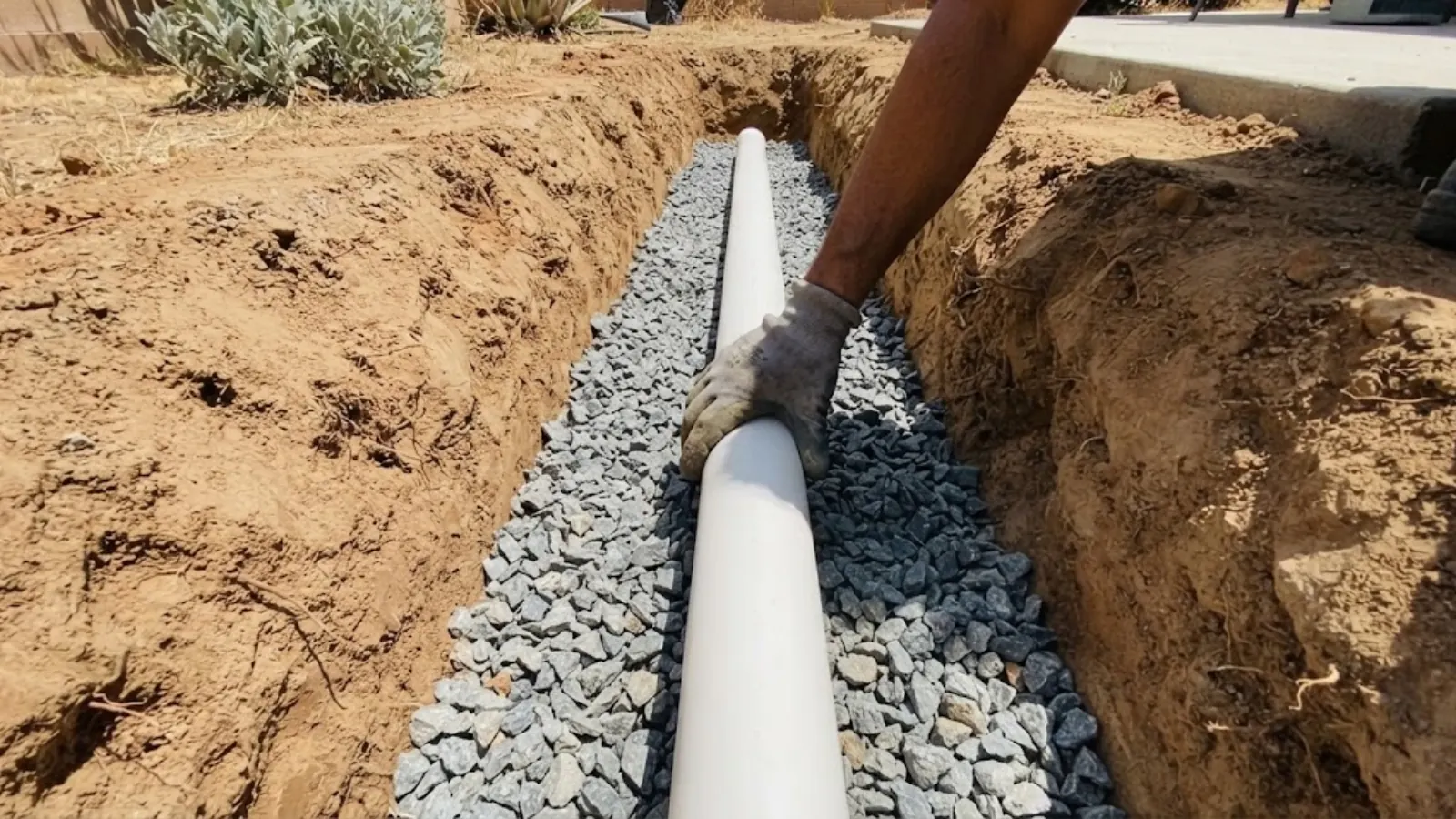
- Install new pipe. The new lateral is pulled or laid and joined to the house and the main.
- Inspect and restore. The city inspects, then we backfill and patch concrete or paving.
What drives the cost of a new sewer line
Replacement pricing comes from the camera footage and a site walk. The biggest factors are below.
| Factor | Why it matters |
|---|---|
| Length | A lateral to a mid-street main is longer than the lot line suggests. |
| Method | Bursting saves surface restoration. Trenching costs less on short, open runs. |
| Street work | Traffic control and street restoration add cost when the connection is in the road. |
| Depth | Deeper lines need larger pits and more shoring. |
| Hardscape | Driveways, patios and mature landscaping raise restoration costs for trenching. |
Insurance note: most policies do not pay for replacing a worn-out sewer line. A service line endorsement may. Ask your insurer before you sign a contract.
Want your real number? Call (714) 750-8637 and describe the job.
Where we replace sewer lines
We replace laterals across Costa Mesa, from 1950s ranch homes to 1970s condo buildings with shared lines, and in nearby cities like Santa Ana. If only one section is damaged, sewer line repair may be enough.