Emergency first step: stop the water
Do these before anything else. They take two minutes.
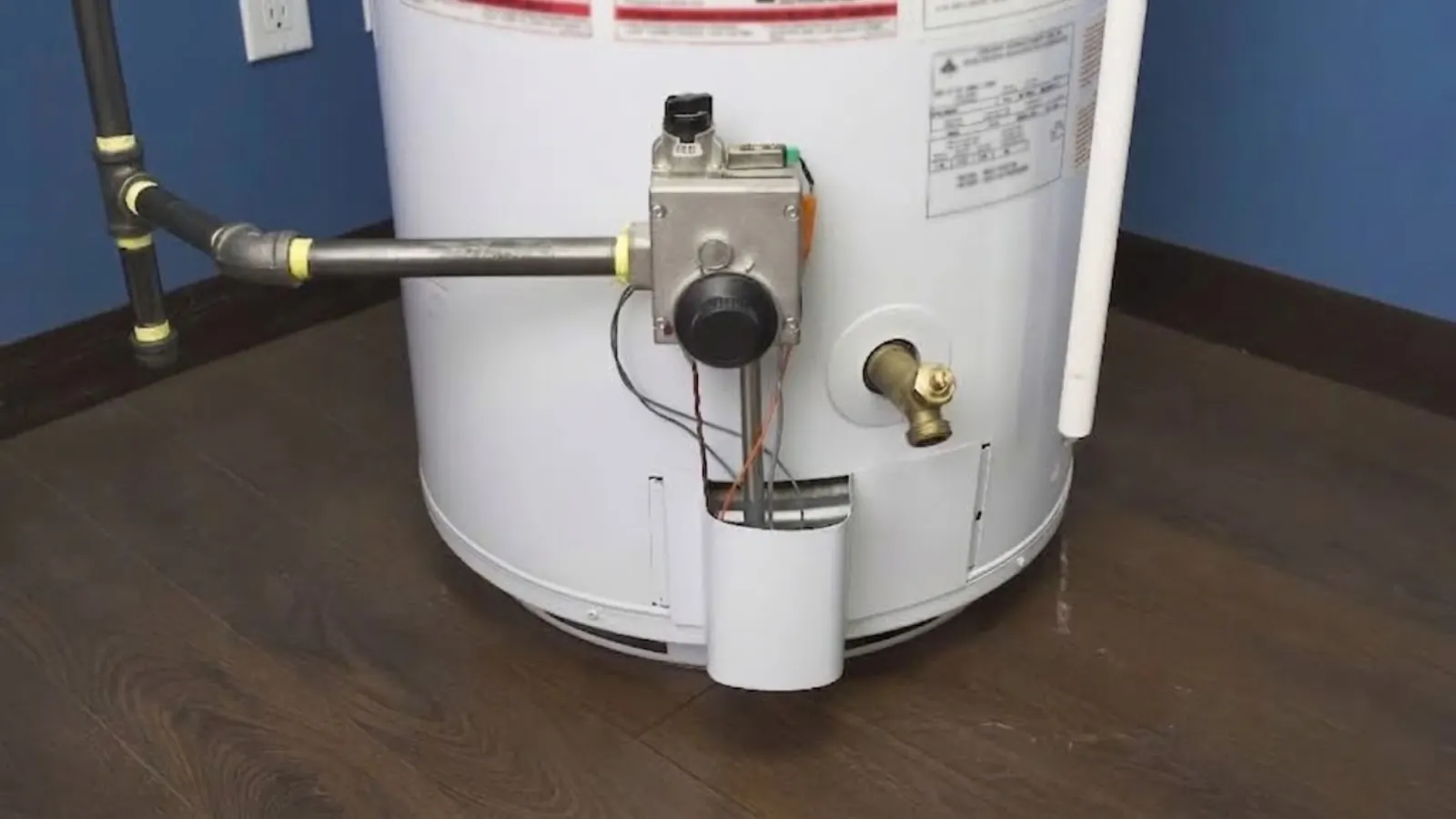
- Close the cold inlet. Turn the valve on the cold pipe at the top of the tank clockwise until it stops.
- Shut off the heat. Turn a gas control to OFF, or switch off the breaker for an electric unit.
- Protect the floor. Move boxes and stored items away and put down towels.
- Leave the tank full. Do not drain it yet. The plumber needs to see where the water is coming from.
If the cold valve will not close or snaps off, close the house main shutoff instead.
When the leak alarm goes off at night
Many water heater floods are found the same way: a leak alarm or a wet garage floor in the middle of the night. If the tank is spraying or water is spreading fast, close the cold inlet and shut off the heat as shown above, then call our 24/7 line.
A slow drip into a bucket is still worth a call the same day. A tank that keeps filling a bucket has usually started to fail, and on a heater 12 to 15 years old, the bottom can let go without warning.
If the heater sits in an attic or a closet over a finished floor, treat even a small leak as urgent. Water there reaches ceilings and flooring before you see it.
Where the water is coming from
Dry the area, then watch for a few minutes. The first wet spot usually points to the source.
| Where you see water | Likely source | Usually |
|---|---|---|
| Dripping from the pipe on the side of the tank. | Relief valve opening from pressure or heat. | Repairable. |
| At the fittings on top of the tank. | Loose or corroded connector. | Repairable. |
| At the drain valve near the bottom. | Worn drain valve. | Repairable. |
| Pooling under the tank with no visible drip. | Tank body corrosion. | Replace the heater. |
| At the edge of the garage slab, not the tank. | A leaking line under the slab. | Leak detection. |
Water at the slab edge with a dry tank is a common surprise. That points to a supply line in or under the concrete, which is a job for slab leak detection and repair.
When a leak means pressure trouble
A relief valve that drips is often doing its job. It opens when pressure or temperature in the tank climbs too high. Replacing the valve without asking why can leave you with a new valve that drips next week.
The California Plumbing Code, which is based on the Uniform Plumbing Code (UPC), calls for a pressure reducing valve when street pressure is above 80 psi. Homes with a reducing valve or check valve also need an expansion tank. We gauge the pressure before replacing anything, and fix the cause along with the leak.
Never plug or cap a leaking relief valve. It is the part that protects the tank from failing violently.
Repair it or replace the heater
A leaking fitting on a tank that is only a few years old is a quick repair. A tank past about ten years that leaks from a fitting may be telling you the rest is close behind, and a repair may only buy months.
A leak from the tank body settles it. The steel has corroded through, and no repair holds. In that case the fastest path is a same-day replacement, sized and strapped to current California code.
If the heater is dry and simply not heating, that is a different job, covered under heater repair for no hot water.
Many Costa Mesa tank heaters sit in attached garages, from the Westside tracts near Fairview Park to the Mesa Verde homes around the golf courses, so a leak often soaks the garage wall before anyone notices it inside.
Limit the damage in a garage or closet
- Check drywall at the base of the garage wall behind the heater. It wicks water up quickly.
- Heaters in closets or attics should sit in a drip pan piped to a drain. Ask about one with any repair.
- Photograph the leak and any damage before cleanup, for your insurer.
- If water has reached finished flooring or walls inside the house, drying equipment may be needed.
What water heater leak repair costs
Most leaks are one part. A few mean a new heater. These factors decide which.
| Factor | Why it matters |
|---|---|
| Leak source | A valve or connector costs far less than replacing the heater. |
| Pressure fixes | Adding an expansion tank or reducing valve adds parts and labor. |
| Tank age | Older tanks are often better replaced than repaired. |
| Access | Closets and attics take longer than an open garage. |
| Timing | Night and weekend calls usually cost more. |
Insurance note: a policy may pay to dry out a flooded garage or closet yet refuse the cost of a heater that simply wore out. Photos help the claim.
Want your real number? Call (714) 750-8637 and describe the job.
Leaking heaters around Costa Mesa
We handle leaking water heaters across 92626 and 92627 and in nearby Newport Beach, where many heaters sit in tight garages and closets.